
Built to Battle Back: A1R Skiff Teams Secure Top-Ten Finishes Against the World’s Best at San Pedro OCR
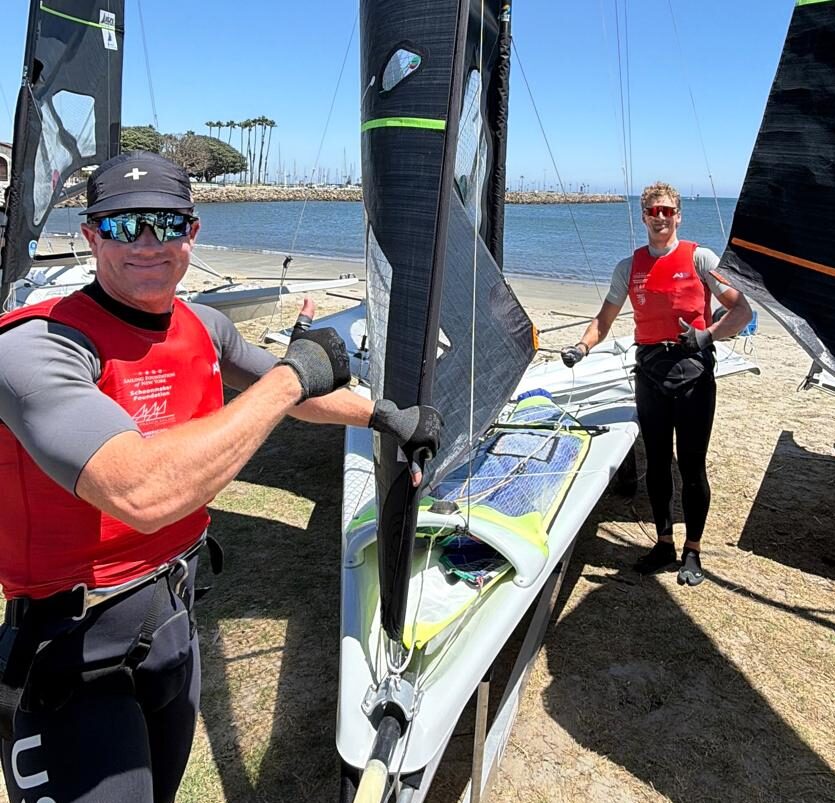
On the future LA 2028 Olympic waters, A1R’s 49erFX team of Paris Henken and Helena Scutt and 49er team of Nevin Snow and Ian MacDiarmid turned a demanding week into a test of speed, judgment and composure. Throughout five days of qualifying at the San Pedro Olympic Classes Regatta (OCR), teams had to judge how aggressively they could attack the line and reach the favored side. Both A1R Project Podium teams had the speed to race near the front; neither had a straightforward path to Saturday’s Finals.
Henken and Scutt: Staying in the Regatta Hunt
Henken and Scutt began the week with three difficult starts. Forced to work through the fleet, they limited the damage by continuing to gain boats around the course. “We felt like we were fighting from the back the whole way through,” Scutt said. “But we kept picking off boats instead of falling further back.” Their response on Day Two was immediate. After focusing on their starts, they won the opening race and followed with a second, climbing six places in the standings. In lighter, less predictable conditions, they kept their approach simple. “We just stuck to our guns,” Henken said.
That ability to reset mattered as the FX standings shifted throughout the week. Henken and Scutt had the speed to compete with the leaders, including Swedish training partners Vilma Bobeck and Ebba Berntsson, but did not always find the position they wanted at the start or on the first leg. Once established, they were difficult to dislodge. They also faced a decision after a possible foul: rather than risk the larger consequences of carrying the matter ashore, they proactively completed a penalty turn and returned to the race. It cost them in the moment but protected their position in the series. They absorbed the setback and secured eighth place entering the Finals.
Snow and MacDiarmid: From the Wrong Side of the Line to Fifth
Snow and MacDiarmid faced a different version of the same test. Their boat speed was evident, but on their most difficult day their over-early calls required them to restart and fight their way back. The scores pushed them outside the top ten after Wednesday’s series, but their sailing remained stronger than the scoreboard suggested. They continued gaining boats and preserved the possibility of a recovery. On Thursday, they moved back across the top-ten cutoff. On Friday, the final day of qualifying, finishes of first, fifth and second made them the best 49er team of the day and lifted them to fifth overall: within striking distance of the podium.
The Finals brought one more test of resilience, when a capsize left Snow and MacDiarmid tenth in the opening race. They responded with a strong start in the second, rounded the first top mark in second and fought through a crowded course to finish third. That recovery moved them to fourth overall, just one place shy of a podium finish. The FX team of Henken and Scutt showed strong moments as they completed their week in seventh overall, showing grit, guts and a longer-term view.
At the end of the San Pedro OCR, the A1R teams stood solidly against the best in the world, with two top-ten finishes on the future Olympic waters. For both teams, the competition delivered a strong result alongside valuable experience as they continue building toward LA 2028.
Professionalism Under Pressure
At A1R, moments like these are not detours from training. They are the training. Olympic sailing demands athletes who can recognize what is happening, reset quickly, communicate under pressure and make the next decision without carrying frustration into the next race. That is what distinguishes A1R’s performance model. The program connects individualized planning with sustained coaching, technical analysis, sports science, mental-skills development and squad-based training. A difficult start, a penalty decision or a lost opportunity becomes usable information: something the athlete and team can evaluate, train and convert into better performance.
San Pedro showed why that integrated approach matters. Speed was essential, but speed alone did not carry these teams into the Finals. Henken and Scutt did not allow difficult starts or a disputed incident to define their week. Snow and MacDiarmid did not let early-start penalties erase the quality of their sailing. A1R’s advantage is not that its athletes avoid hard moments. It is that they are trained and supported to use them to recover faster, learn more precisely and return ready to compete.